Optimism Grants and Ecosystem Overview
Optimism has evolved from a simple scaling experiment into the most used blockchain infrastructure on Ethereum. At its core is OP Mainnet, the flagship Layer 2 network that processes transactions in batches using optimistic rollups. This architecture delivers low costs and near-instant finality without sacrificing the security guarantees of the Ethereum base layer [1].
The ecosystem is built on the OP Stack, an open-source blueprint that allows developers to launch customizable Layer 2s with Ethereum-grade security [1]. This modular approach has turned Optimism into a foundational pillar for decentralized finance (DeFi). In this context, a DeFi ecosystem refers to financial services like lending, borrowing, and trading that operate on a public, permissionless network accessible to anyone with an internet connection [2].
Optimism Grants plays a central role in this growth. By funding projects that build on OP Mainnet and the broader OP Stack, the program acts as a catalyst for innovation. It supports the development of protocols that deepen liquidity, improve user experience, and expand the utility of the network. Understanding this infrastructure is the first step to navigating the opportunities within the Optimism DeFi landscape.
How grants stack up against arbitrum and base
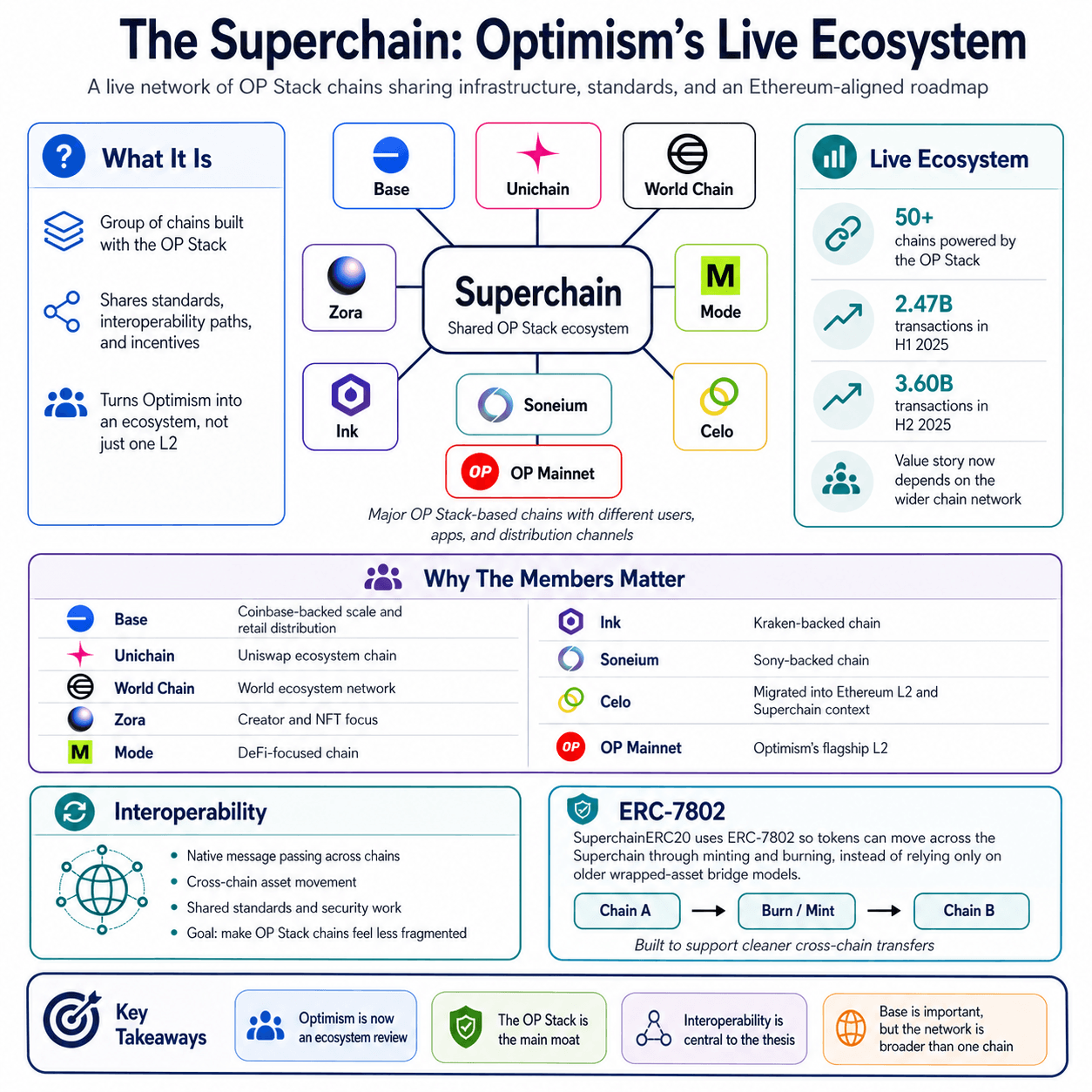
Optimism, Arbitrum, and Base are all fighting for the same pool of DeFi builders, but they are playing different games. Understanding where each chain puts its money helps you decide which ecosystem aligns with your project's goals. Optimism leans into the "Superchain" narrative, funding infrastructure that connects multiple chains. Arbitrum focuses on high-throughput DeFi and governance depth. Base, backed by Coinbase, prioritizes user onboarding and consumer-facing applications.
The table below compares the core characteristics of each grant program. Note that grant sizes and ecosystem metrics fluctuate as each DAO adjusts its treasury allocation.
| Chain | Primary Focus | Grant Structure | Ecosystem Size |
|---|---|---|---|
| Optimism | Superchain infrastructure & public goods | Seasonal rounds (e.g., Season 9) | Large (OP Mainnet + OP Stack chains) |
| Arbitrum | DeFi innovation & DAO governance | Continuous funding & retroactive rewards | Large (Highest TVL among L2s) |
| Base | User growth & consumer apps | Accelerator programs & direct grants | Rapidly growing (Coinbase-backed) |
Optimism’s approach is unique because it treats grant funding as a public good. Instead of just rewarding revenue-generating protocols, the Optimism Collective funds tools that benefit the entire network, including the OP Stack itself. This creates a more collaborative, though sometimes slower, development environment compared to the competitive, TVL-chasing models of Arbitrum and Base.
If you are building infrastructure that supports multiple chains, Optimism’s grants offer the best alignment. For pure DeFi yield or complex governance mechanisms, Arbitrum’s deep liquidity pool is often more rewarding. If your goal is rapid user acquisition through a centralized exchange gateway, Base’s ecosystem provides the most direct path to mainstream adoption.
The op stack modular foundation
Optimism operates on the OP Stack, an open-source software framework that serves as the backbone for its DeFi ecosystem. Rather than building a single, closed-chain solution, Optimism provides the modular infrastructure that allows developers to launch their own customizable Layer 2 blockchains. This approach has made the OP Stack the most used blockchain infrastructure for scaling Ethereum, enabling a network of interconnected chains that share security and compatibility.
The core innovation lies in its modularity. The OP Stack separates the execution layer from the consensus and settlement layers. This means that projects like Base, Zora, and others can build on top of Optimism’s security model without reinventing the wheel. For DeFi applications, this modularity translates to flexibility. Developers can tailor gas models, sequencing rules, and governance structures to fit their specific needs while still benefiting from Ethereum’s robust security guarantees.
This infrastructure is not just theoretical; it is actively powering the ecosystem. The OP Stack enables "rollups-as-a-service," lowering the barrier to entry for new DeFi protocols. By leveraging shared infrastructure, projects can focus on innovation rather than infrastructure maintenance. This collaborative model fosters a vibrant ecosystem where DeFi applications can interoperate seamlessly, creating a more efficient and scalable financial network.
The technical foundation also includes the Bedrock upgrade, which significantly improved the efficiency and interoperability of the OP Stack. Bedrock introduced a shared sequencer and simplified the bridge mechanics, making it easier for assets to move between Ethereum and OP Stack chains. This upgrade has been crucial for the growth of DeFi on Optimism, as it reduces costs and improves user experience.
Ultimately, the OP Stack is more than just a technical framework; it is a strategic asset for the DeFi ecosystem. By providing a standardized, open-source foundation, Optimism has enabled a wave of innovation that benefits both developers and users. As the ecosystem continues to grow, the OP Stack will remain a critical component, ensuring that DeFi applications can scale efficiently and securely.
DeFi ecosystem and tvl trends
The Total Value Locked (TVL) in the Optimism ecosystem serves as a primary barometer for its health and adoption. Unlike many Layer 2s that rely on a single dominant protocol, Optimism has cultivated a diverse DeFi landscape. This diversity stabilizes the network, ensuring that liquidity isn't concentrated in one fragile point. When one sector slows, others often pick up the slack, creating a more resilient financial infrastructure.
Major protocols like Velodrome Finance and Synthetix anchor this ecosystem. Velodrome acts as the central liquidity hub, using its dual-token model to incentivize trading pairs and provide deep liquidity for other projects. Synthetix brings decentralized derivatives to the chain, allowing users to trade synthetic assets with minimal slippage. These protocols don't just exist in isolation; they interlock, sharing liquidity and user bases to create a cohesive financial environment.
Market performance varies across these protocols, reflecting different user preferences and risk appetites. While some users flock to high-yield liquidity mining opportunities, others prefer the stability of established lending markets. This split is visible in the TVL distribution, which shifts as market conditions change. Tracking these movements helps investors understand where capital is flowing and which sectors are gaining momentum.
To see how the ecosystem token performs alongside broader market trends, you can monitor live price data below. This real-time view helps contextualize protocol growth against the general sentiment of the crypto market.
How to play the Optimism grants game
The OP Grants program isn't a lottery; it's a structured pipeline for builders who understand the network's specific needs. Whether you are writing code or looking at the market, success here depends on aligning with the ecosystem's long-term infrastructure goals rather than chasing short-term hype.
1. Read the grant guidelines before writing code
The Optimism Foundation publishes clear criteria for what constitutes a valid grant. Your proposal must demonstrate technical merit and alignment with the Superchain vision. Skipping this step is the fastest way to get rejected. Focus on projects that solve real scalability or interoperability problems rather than duplicating existing work.
2. Build a working prototype
Ideas are cheap; code is credible. Submitting a minimal viable product (MVP) or a detailed technical specification significantly increases your chances. If you are an investor, look for projects that have moved beyond whitepapers to active development on OP Mainnet. This signals that the team can execute, not just pitch.
3. Engage with the community early
Optimism values transparency. Share your progress in the official forums and Discord channels. Feedback from core contributors and other builders can refine your approach before you submit a formal application. This visibility also helps investors identify which projects are gaining genuine traction within the ecosystem.
4. Track emissions and token utility
For investors, understanding how OP token emissions are distributed is critical. Recent discussions on Lido Research highlight how grant emissions aim to create a vibrant, unique DeFi ecosystem. Monitor these flows to identify which sectors are receiving the most support, as this often precedes price action or significant protocol upgrades.
Check the official Optimism Grants portal for open rounds. Understand the specific verticals they are targeting, such as DeFi, NFTs, or infrastructure, to tailor your strategy.
Build a functional prototype or detailed technical spec. Focus on solving a specific problem on OP Mainnet rather than building a generic Ethereum port.
Submit your proposal with clear milestones. Engage with reviewers, incorporate feedback, and maintain transparency throughout the process.
Common questions about op grants
Before diving into the specifics of grant applications, it helps to clarify the foundational concepts behind the Optimism ecosystem and its infrastructure.
What is a DeFi ecosystem?
Decentralized Finance, or DeFi, is a financial ecosystem that operates on shared public blockchain infrastructure rather than traditional centralized intermediaries. It enables services like lending, borrowing, and trading to be accessible to anyone with an internet connection. The Optimism ecosystem specifically aims to provide these protocols with their own liquidity while ensuring better interoperability between different DeFi applications on the network.
Is Optimism the same as OP Mainnet?
OP Mainnet is Optimism's flagship Ethereum Layer 2 blockchain, launched in 2019. It processes transactions in batches using optimistic rollup technology, which allows for low-cost and near-instantaneous transactions. When people refer to "Optimism" in the context of grants and development, they are almost always referring to building on OP Mainnet.
Who owns Optimism?
Optimism is not owned by a single entity in the traditional corporate sense, though it was founded by Kevin Ho, Karl Floersch, and Jinglan Wang. The project, formerly known as Plasma Group, is governed by the Optimism Collective. This structure aims to align the incentives of builders, users, and the network itself through a system called "Superchain" governance, where the OP token plays a central role in decision-making.
Helpful gear
Use these product recommendations as a starting point, then choose the size, material, and price point that fit how you actually use the gear.

As an Amazon Associate, we may earn from qualifying purchases.
No comments yet. Be the first to share your thoughts!