Optimism ecosystem snapshot
The Optimism DeFi ecosystem has matured from a speculative testbed into a critical infrastructure layer for Ethereum scaling. With nearly 250 applications deployed across the network, the focus has shifted from mere deployment to sustainable, high-throughput utility. This growth is underpinned by the Superchain architecture, which standardizes security and interoperability across its layer-2 network.
The total value locked (TVL) in Optimism’s DeFi protocols reflects this structural shift. As Ethereum Layer-2 adoption accelerates, capital flows toward chains that offer both low transaction costs and robust liquidity depth. Optimism’s grant programs have played a pivotal role in attracting these projects, incentivizing the development of decentralized exchanges, lending platforms, and yield aggregators that leverage the network’s speed.
Key metrics indicate a steady increase in daily active users and transaction volume, driven by the network’s ability to process transactions cheaper and faster than Ethereum mainnet. This efficiency has made it a preferred choice for users seeking to minimize gas fees without sacrificing security. The ecosystem’s health is further evidenced by the diversity of its applications, with decentralized finance (DeFi) accounting for a significant portion of the total deployed contracts.
How Optimism distributes grant funding
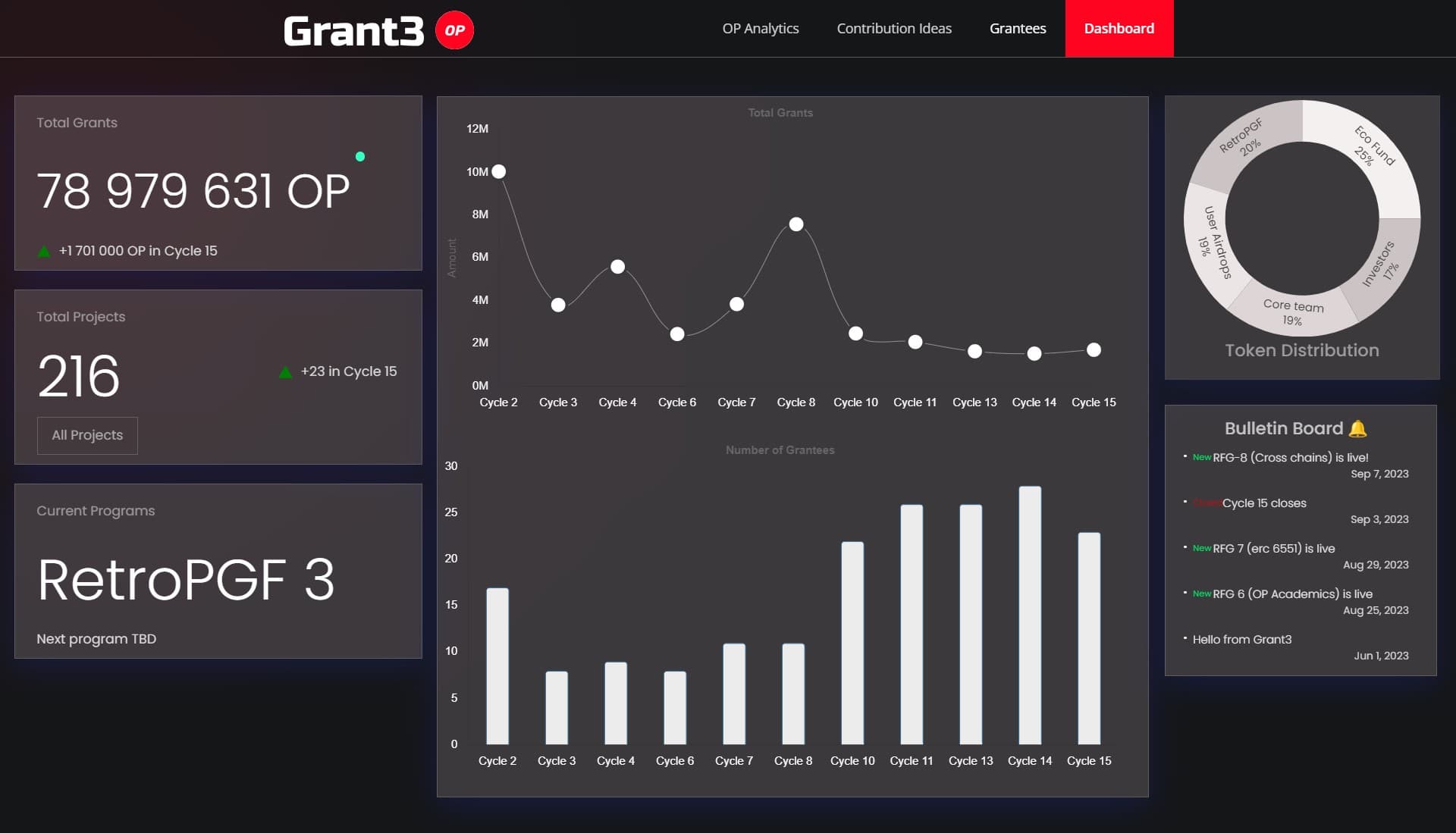
Optimism’s grant system operates on two distinct tracks: Retro Funding and proactive ecosystem contributions. Understanding the difference is essential because the application process, evaluation criteria, and payout structures vary significantly between them. The ecosystem relies on Retro Funding as its primary engine, rewarding projects that have already demonstrated value, while proactive grants serve as targeted injections for specific, pre-approved needs.
Retro Funding: Rewarding proven impact
Retro Funding is the backbone of the Optimism Collective. Instead of funding proposals upfront, the system rewards projects that have already shipped and gained traction. This mechanism aligns incentives by ensuring that public goods are funded only after they have proven their utility to the community. Projects apply for Retro Public Goods Funding by submitting evidence of their impact, which is then evaluated by the Optimism Collective community.
The process is transparent and community-driven. Grantees must document their milestones and outcomes, which are tracked on Karma. This platform serves as the central ledger for all grant activity, allowing anyone to browse funded projects, filter by category, and verify progress. The reliance on retrospective validation reduces the risk of funding abandoned projects and ensures that capital flows to work that the community actually uses.
Proactive grants and the role of Karma
While Retro Funding handles the bulk of ecosystem support, proactive grants address specific, high-priority gaps identified by the Optimism team. These grants are typically announced with clear scopes and deadlines, requiring applicants to meet strict milestones. Unlike the open-ended nature of Retro Funding, proactive grants are more controlled and often tied to immediate technical or strategic goals.
Karma plays a critical role in both tracks. It is not just a database but the operational heart of grant management. Developers and teams use Karma to track their milestones, submit proof of work, and monitor the status of their funding. The platform provides a clear view of grantee progress, fostering accountability and transparency. By centralizing this data, Optimism ensures that the community can trust the integrity of the funding process, whether it is a small retro grant or a large proactive initiative.
Tracking milestones and payouts
The distinction between these funding mechanisms matters for how teams plan their development cycles. Retro Funding requires a longer runway, as teams must build first and apply later. Proactive grants offer faster access to capital but come with more rigid requirements. Regardless of the path, the use of Karma ensures that all grants are tracked uniformly, providing a single source of truth for the ecosystem’s financial health.
For developers, the key is to engage with the community early. Even if you are not applying for Retro Funding immediately, participating in the ecosystem and documenting your work on Karma builds the credibility needed for future grants. The system is designed to reward consistency and impact, not just ambition. By leveraging these tools, teams can plan around the grant landscape with clarity and purpose.
Core DeFi infrastructure tools
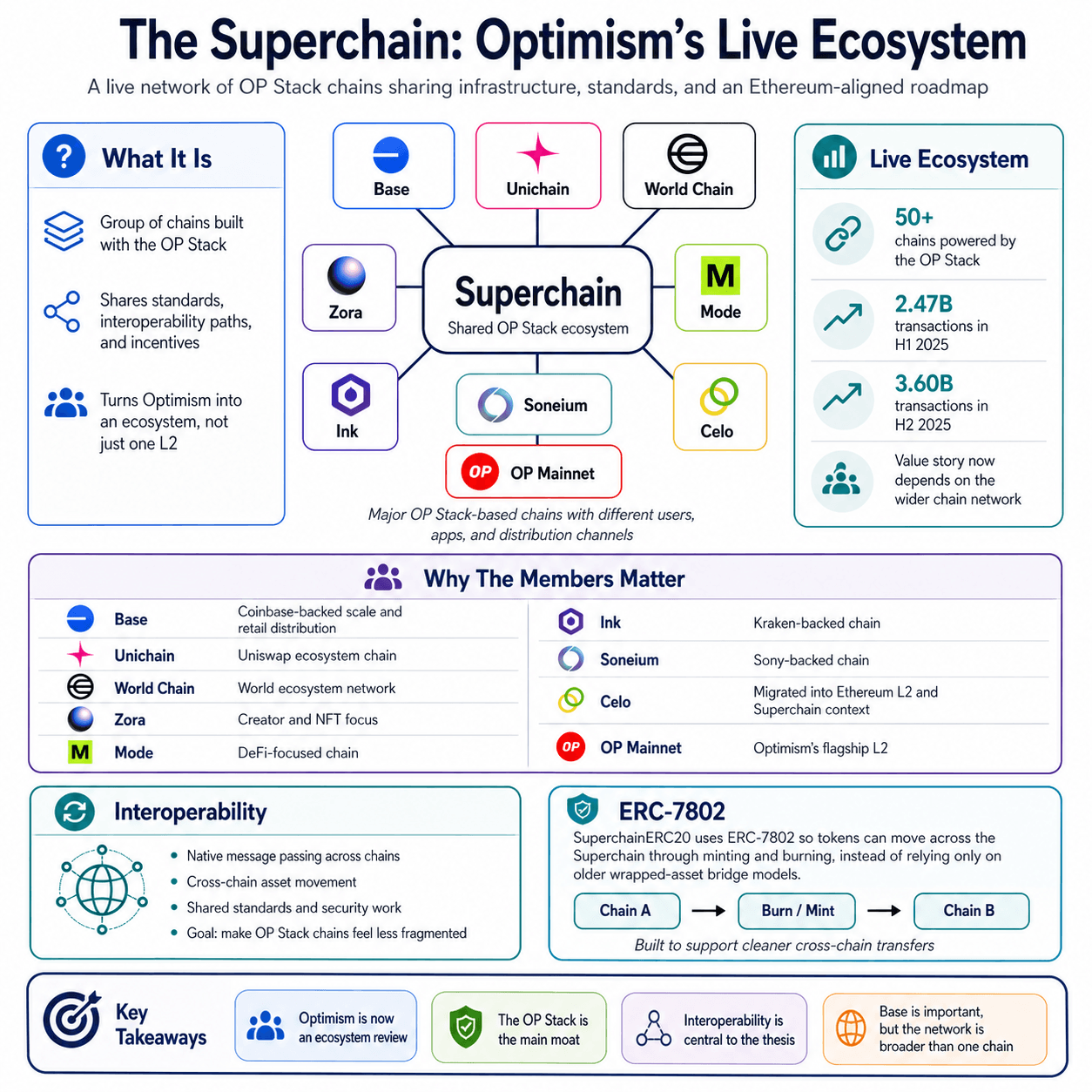
Optimism’s DeFi ecosystem doesn’t run on magic; it runs on a modular stack designed for composability. At the center of this architecture is the OP Stack, an open-source framework that allows developers to spin up their own Layer 2 chains while maintaining compatibility with the broader Ethereum network. This modularity is what enables the "Superchain" vision, where different chains can share liquidity and security standards without reinventing the wheel.
The backbone of this system is Bedrock, the upgrade that transformed Optimism from a monolithic rollup into a modular infrastructure layer. Bedrock introduced native support for USDC via CCTP and significantly reduced latency, making it viable for high-frequency DeFi applications. For grant recipients building in this space, understanding the distinction between the OP Stack (the tooling) and Bedrock (the execution layer) is critical for selecting the right technical foundation.
| Component | Role | Best For |
|---|---|---|
| OP Stack | Open-source software for deploying L2s | Custom chains, app-chains |
| Bedrock | Execution layer upgrade | High-throughput DeFi, low latency |
| OP Mainnet | The primary L2 chain | General-purpose DeFi, user activity |
| Karma | Governance framework | Community voting, proposal tracking |
The choice between these components often depends on whether a project needs its own chain or is building on top of the existing OP Mainnet. For most DeFi protocols, leveraging the existing Bedrock infrastructure offers the fastest path to liquidity, while the OP Stack is reserved for specialized use cases requiring isolated execution environments. This separation of concerns allows the ecosystem to scale horizontally without sacrificing the security guarantees of Ethereum.
Strategic use cases for builders
The Optimism Foundation isn't just distributing funds; it's actively shaping the architecture of the ecosystem. Grants are increasingly targeted toward specific high-impact use cases that solve fragmentation and drive real user adoption. Two areas have emerged as primary recipients of significant capital: modular DeFi networks and direct user growth incentives.
Modular DeFi represents a shift away from monolithic chains toward specialized layers. Projects like Mode have received substantial support to build infrastructure that separates execution from settlement. This approach allows for greater scalability and flexibility, enabling developers to tailor their stack to specific needs rather than relying on a one-size-fits-all solution.
Mode received up to a $2 million OP grant to support user growth incentives, highlighting the foundation's focus on tangible adoption metrics.
User growth incentives remain the other critical pillar. Rather than subsidizing protocol development alone, grants are now frequently tied to measurable user acquisition and retention. This strategy ensures that funded projects deliver immediate value to the community, creating a virtuous cycle where increased usage justifies further investment.
By focusing on these two strategic areas, the foundation aims to reduce reliance on generic liquidity mining and instead foster a robust, sustainable DeFi ecosystem. Builders are encouraged to align their proposals with these priorities to increase their chances of securing support.
Governance and protocol upgrades
Optimism’s governance isn’t just a voting booth; it’s the primary interface for how the network evolves. The OP Stack, the open-source software licensed under MIT that powers the chain, allows for rapid iteration. However, changes to the core protocol require explicit community approval through Optimism Collective governance. For builders, understanding this timeline is as important as understanding the code itself.
When a grant recipient like a DeFi protocol proposes an upgrade, it doesn’t happen overnight. The process moves from governance forum discussion to on-chain voting. This ensures that changes to economic parameters or security models reflect the consensus of the ecosystem. Builders need to monitor these proposals closely, as a shift in governance direction can impact liquidity incentives or fee structures overnight.
The technical side relies on the OP Stack’s modularity. Because the software is open-source, forks and upgrades can be tested in parallel environments before being deployed to mainnet. This reduces risk but requires developers to stay updated on the latest stack versions. Ignoring governance updates can lead to compatibility issues or missed opportunities in the evolving DeFi landscape.
Helpful gear
Use these product recommendations as a starting point, then choose the size, material, and price point that fit how you actually use the gear.

As an Amazon Associate, we may earn from qualifying purchases.
No comments yet. Be the first to share your thoughts!