OP mainnet vs. OP stack
Optimism has three distinct parts that often get tangled together. You have the company building the tech, the open-source code that powers it, and the actual blockchain network where transactions happen. Confusing these three leads to bad investment theses and misplaced technical expectations.
The OP Mainnet is the live blockchain. This is the Layer 2 network where you actually send transactions, bridge assets, and interact with DeFi protocols. It operates as a settlement layer for Optimism Collective projects. When you see the OP token price or check a block explorer, you are looking at the results of the OP Mainnet.
The OP Stack is the underlying software. It is an open-source modular blockchain toolkit licensed under MIT. Developers use the OP Stack to build their own Layer 2 rollups, not just for the main network. This modular approach allows teams to customize consensus and data availability without starting from scratch.
The company behind it all is Optimism. They develop the OP Stack and govern the OP Mainnet through the Collective. While the company drives the roadmap, the network and the code operate independently. Understanding this separation is essential for evaluating the long-term viability of the ecosystem.
How grants drive ecosystem growth
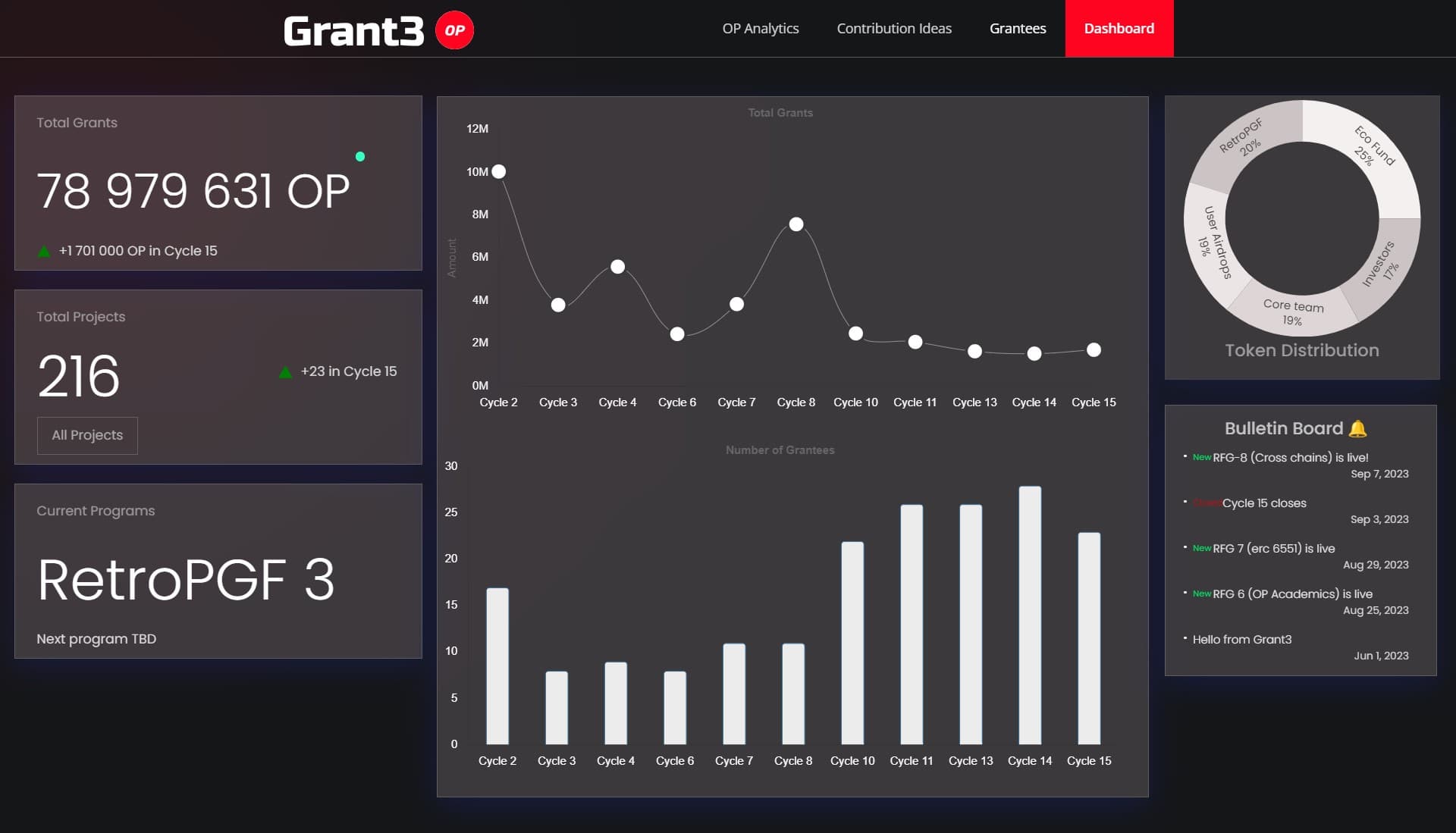
Optimism operates as a grant-funded ecosystem designed to drive decentralized finance (DeFi) innovation through a unique economic model. Unlike traditional venture capital structures that prioritize equity and control, Optimism’s funding mechanism focuses on public goods and protocol-level upgrades. This approach aligns the incentives of developers with the long-term health of the network, ensuring that critical infrastructure receives consistent support rather than sporadic bursts of capital.
The core of this strategy is the Ecosystem Contributions program. Rather than waiting for projects to submit proposals, the Optimism Collective actively identifies gaps in the DeFi landscape and funds them proactively. This proactive model allows for faster iteration on complex financial primitives, such as lending protocols and decentralized exchanges, which are the backbone of the OP Mainnet. By reducing the friction of funding, the ecosystem encourages builders to focus on code rather than fundraising.
To understand how this compares to other leading Layer 2 solutions, we can look at the funding models of Arbitrum and Base. While all three aim to scale Ethereum, their approaches to grant distribution and community incentives differ significantly.
| Feature | Optimism | Arbitrum | Base |
|---|---|---|---|
| Funding Model | Ecosystem Contributions (Proactive) | Grant Program (Reactive) | Direct Treasury Grants |
| Primary Focus | Public Goods & Core Infra | DApp Development | User Acquisition & Builders |
| Community Role | High (Superchain Vision) | Medium (DAO Governance) | Low (Foundation Led) |
| Transparency | Open GitHub Repository | Public Grant Tracker | Limited Public Data |
The table above highlights that Optimism’s model is distinct in its emphasis on proactive funding for public goods. Arbitrum relies more on a reactive grant system where projects apply for support, while Base, backed by Coinbase, often focuses on user acquisition and direct builder support. This difference in strategy shapes the type of DeFi applications that flourish on each chain. Optimism’s approach tends to attract developers building foundational tools that benefit the entire Superchain, rather than just isolated applications.
For investors and builders, understanding these funding mechanics is crucial. It signals where the next wave of innovation is likely to emerge. If a chain is heavily investing in core infrastructure, it often leads to more robust and interoperable DeFi applications. Conversely, chains focusing solely on user incentives may see rapid growth but less sustainable protocol development. This long-term view is essential for evaluating the true value of the OP token and the broader ecosystem.
Top DeFi projects on Optimism
The Optimism network hosts a diverse set of decentralized finance protocols, each leveraging the chain's low fees and high throughput to serve specific market needs. From lending markets to decentralized exchanges, these projects form the backbone of the OP Mainnet economy. Understanding their distinct utilities helps identify where grant support has driven the most meaningful innovation.
Aave
Aave remains the dominant lending and borrowing protocol on Optimism, providing deep liquidity for stablecoins and major assets. Its integration allows users to earn yield on deposits or borrow against collateral with minimal friction. The protocol's robust security audits and long-standing track record make it a foundational pillar for risk-averse DeFi participants seeking yield without leaving the ecosystem.
Uniswap
Uniswap V3 is the primary liquidity hub for token swaps on Optimism, offering concentrated liquidity positions that maximize capital efficiency. It handles the majority of trading volume across the network, serving as the go-to venue for both retail traders and institutional flows. Its presence ensures that assets can be traded with low slippage and near-zero gas costs, reinforcing Optimism's position as a high-performance layer-2 solution.
Synthetix
Synthetix brings synthetic assets to the Ethereum Layer 2 space, allowing traders to gain exposure to real-world assets, commodities, and indices without holding the underlying instruments. By settling on Optimism, Synthetix reduces the cost of trading these complex derivatives, making them accessible to a broader audience. The protocol's staking mechanism also incentivizes liquidity provision, creating a self-sustaining ecosystem for synthetic markets.
Velodrome
Velodrome is the leading native decentralized exchange and liquidity market on Optimism, designed to capture trading fees for its ve(3,3) token holders. It acts as the primary liquidity layer for many other DeFi protocols on the chain, offering tailored incentives to attract deep pools for specific trading pairs. Its governance model aligns the interests of liquidity providers with the long-term health of the network, making it a critical component of the Optimism DeFi stack.
Rabby Wallet
While not a DeFi protocol itself, Rabby Wallet has become the standard interface for interacting with Optimism-based DeFi. It offers transaction previews, multi-chain support, and seamless bridging capabilities, reducing the complexity of navigating Layer 2 ecosystems. Its integration with Optimism ensures that users can manage their assets across multiple chains with a single, secure interface, lowering the barrier to entry for new participants.
Optimism OP token price and market outlook for 2026
The Optimism network operates as a layer 2 scaling solution designed to boost Ethereum performance, allowing DeFi users to transact faster and cheaper. This infrastructure improvement directly influences the OP token's utility and demand. As the ecosystem expands, the token's price action becomes increasingly tied to the health of its underlying DeFi applications and grant-driven growth.
Current market sentiment suggests that Optimism remains a worthwhile purchase for those with a long-term perspective on decentralization. However, investors must weigh this against their individual risk tolerance. The network’s ability to attract high-value projects through its OP Grants program creates a fundamental floor for the token, distinguishing it from purely speculative assets.
Looking ahead to 2026, technical analysis points to significant resistance levels. A breakout past the $12 resistance zone could drive OP toward higher valuations, with $10 acting as a critical psychological support level. While some projections extend to 2028 with targets between $12 and $16, the immediate 2026 outlook hinges on sustained ecosystem adoption and successful grant execution.
Builder and investor checklist
Navigating the OP Grants DeFi Ecosystem requires a disciplined approach. Whether you are building on OP Mainnet or allocating capital, you need a framework to separate signal from noise. This checklist provides a concrete set of steps to evaluate opportunities, grounded in official documentation and on-chain data.
Verify official grant and governance sources
Start by consulting primary sources. Do not rely on third-party summaries for grant eligibility. Visit the official Optimism Governance docs for the latest OP Stack standards and the Ecosystem Contributions repo for active grant listings. Misinterpreting a requirement here can cost months of development time.
Audit protocol smart contracts and audits
For investors, technical due diligence is non-negotiable. Check if a project’s smart contracts have been audited by reputable firms. Look for live usage metrics rather than just total value locked (TVL), which can be inflated. Use tools like DefiLlama to verify that the underlying DeFi protocols are generating genuine volume and fees on the Optimism network.
Assess tokenomics and OP price trends
The health of the ecosystem is tied to the OP token. Before entering a position, review the current market structure. Use the TechnicalChart below to analyze price action and resistance levels. Understanding the token’s liquidity and vesting schedules helps you gauge long-term viability beyond short-term speculation.
Evaluate community engagement and support
A project’s resilience is often reflected in its community. Browse the Karma community page to see which projects are actively supported by grant recipients. Look for active developer discussion and transparent communication from the team. Strong community backing often correlates with sustained protocol growth and better risk management.
Frequently asked: what to check next
Helpful gear
Use these product recommendations as a starting point, then choose the size, material, and price point that fit how you actually use the gear.

As an Amazon Associate, we may earn from qualifying purchases.
No comments yet. Be the first to share your thoughts!