The current state of Optimism's DeFi ecosystem
Optimism operates as a layer 2 scaling solution designed to boost Ethereum’s performance, allowing DeFi users to transact faster and with lower costs. While the technical infrastructure provides the rails, the real momentum comes from the ecosystem's growth strategy. Understanding how Optimism OP Grants have shaped this landscape is essential for evaluating the network's trajectory in 2026.
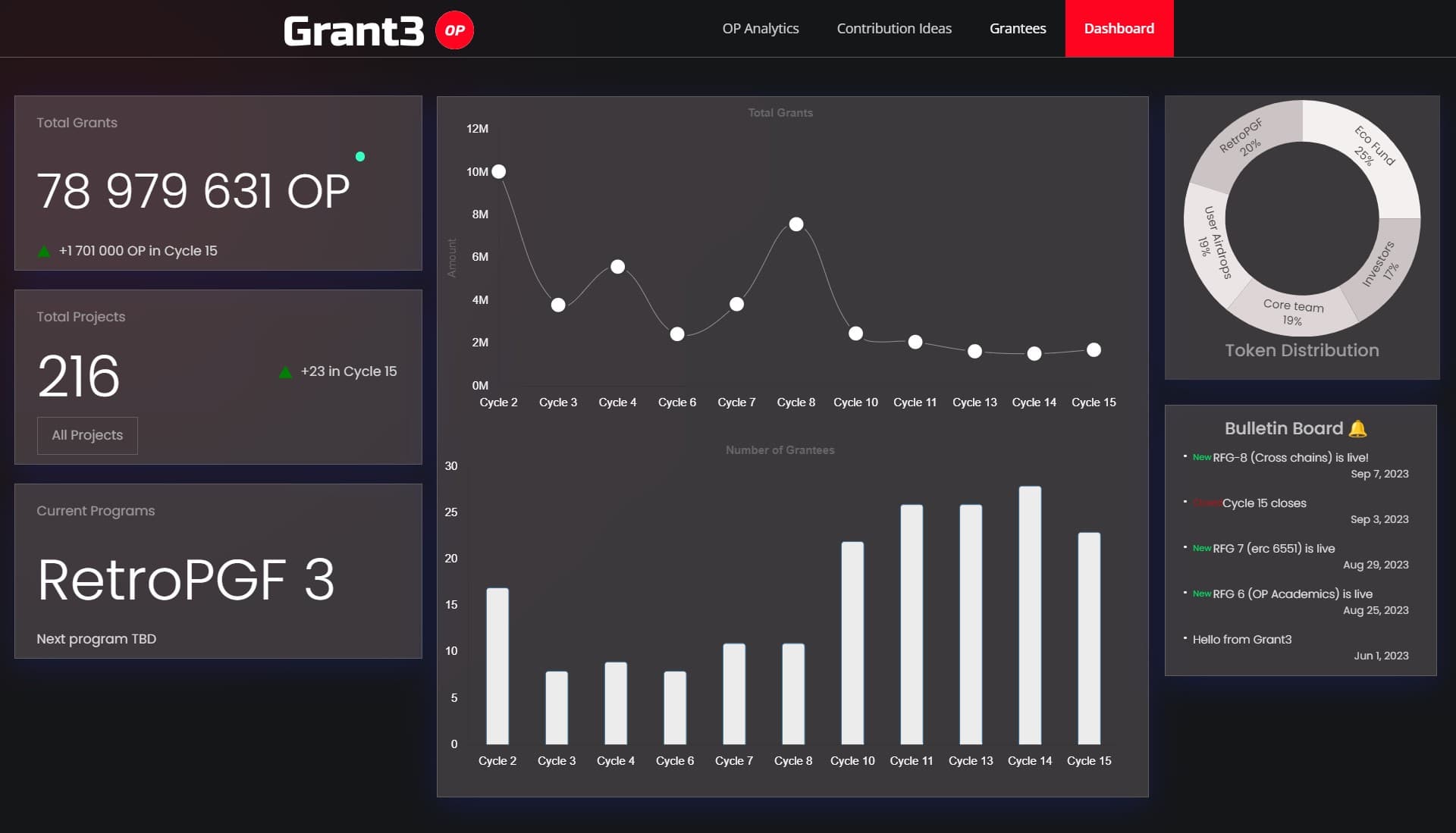
The impact of these grants is measurable. An observational analysis of the S7 Grants Council measured ROI using net Superchain TVL inflows, revealing that targeted funding directly correlates with capital retention and expansion within the ecosystem. This isn't just about building apps; it's about ensuring that the value generated stays within the Optimism environment rather than leaking to other chains.
For investors and developers, the stakes are high. The network is competing in a crowded layer 2 space, and its ability to sustain TVL growth depends on continued grant effectiveness and infrastructure upgrades. The following sections break down the specific mechanisms driving this growth and what they mean for the 2026 strategy.
Tracking Grants Council Impact
The Grants Council doesn't just hand out OP tokens; it measures whether those tokens actually grow the ecosystem. Success is defined by two hard metrics: OP-normalized ROI and net Superchain TVL inflows. This approach moves beyond vanity metrics like "projects funded" to focus on capital efficiency and real economic activity.
OP-normalized ROI calculates the value generated per token distributed. If a grant brings in $100,000 in new TVL but costs 10,000 OP to fund, the efficiency is clear. This metric ensures that grants are not just subsidizing existing projects but attracting new liquidity to the Superchain. It forces a rigorous evaluation of whether the incentive structure is actually driving growth or just redistributing existing capital.
Net Superchain TVL inflows track the actual money moving into Optimism-based protocols. The Council looks at data from March 20 to June 30 to see if grant recipients are retaining and growing their user bases. A successful grant doesn't just launch a product; it sustains it. The goal is to see a direct correlation between grant funding and sustained TVL growth, ensuring that the ecosystem is becoming more robust and less dependent on short-term hype.
This data-driven approach allows the Council to adjust future allocations based on what actually works. By focusing on ROI and TVL, they can identify which sectors are gaining traction and which are underperforming. This ensures that the Grants Council remains agile and responsive to the market, directing resources where they have the highest impact. For more details on the specific analysis methods, see the S7 Grants Council Impact Analysis.
- OP-Normalized ROI: Measures capital efficiency by comparing grant costs to TVL growth.
- Net TVL Inflows: Tracks actual liquidity movement into grant-supported protocols.
- Data-Driven Adjustments: Future allocations are based on proven ROI and sustained growth.
Comparing Layer 2 Infrastructure
Optimism does not exist in a vacuum. It competes directly with Arbitrum and emerging ZK-rollups for developer mindshare and liquidity. While all three solve Ethereum’s scalability issues, their underlying mechanics differ significantly, impacting cost, speed, and security guarantees.
The core distinction lies in how they handle disputes. Optimism uses optimistic rollups, which assume transactions are valid unless proven otherwise. This allows for faster processing but requires a challenge period for fraud proofs. Arbitrum also uses optimistic rollups but employs a more complex multi-round fraud proof system. This can reduce on-chain gas costs during disputes but may slow down the resolution process compared to Optimism’s single-round approach.
ZK-rollups, by contrast, use zero-knowledge proofs to mathematically prove transaction validity before settling on Ethereum. This offers immediate finality and higher security guarantees but currently comes with higher computational costs for sequencers, which can translate to different fee structures for users.
The table below outlines the primary technical differences affecting your DeFi strategy:
| Feature | Optimism | Arbitrum | ZK-Rollup |
|---|---|---|---|
| Rollup Type | Optimistic | Optimistic | Zero-Knowledge |
| Fraud Proof | Single-round | Multi-round | N/A (Validity) |
| Finality | ~7 days | ~7 days | Immediate |
| Gas Cost (Post-EIP-4844) | Low | Low | Moderate |
EIP-4844 has drastically reduced gas costs across all L2s, narrowing the price gap. However, the trade-off remains: Optimism and Arbitrum offer lower immediate costs with delayed finality, while ZK-rollups offer instant finality at a potentially higher computational overhead. For high-frequency DeFi trading, the 7-day withdrawal window on Optimism and Arbitrum introduces a specific liquidity risk that ZK-rollups avoid.
Essential DeFi Tooling for 2026
Navigating the Optimism ecosystem requires more than just holding OP; it demands a reliable toolkit. The grants program has funded specific infrastructure layers that act as the backbone for both developers building trustless protocols and users seeking transparent financial products. Without these tools, the risk of interacting with broken or insecure contracts increases significantly.
The foundation of this ecosystem is the chain itself, which uses single-round fraud proofs to secure transactions. While this makes the network faster than competitors like Arbitrum, it can lead to higher gas fees during congestion. Understanding this trade-off is essential for anyone managing significant capital on the chain. You can track the current market sentiment and technical indicators for the native token below.
The grants program specifically targets modular DeFi Layer 2 networks. For example, recent funding rounds have supported projects like Mode, which received up to 2 million OP tokens to drive user growth and incentive programs. These grants are not just about liquidity; they are about building the specific tooling that allows DeFi applications to scale securely.
For developers, the priority is identifying which grant-funded projects offer the most robust smart contract libraries. For users, the priority is finding the most secure bridges and aggregators. The ecosystem is growing, but the tools that survive will be those that prioritize security over speed.


As an Amazon Associate, we may earn from qualifying purchases.
The Long Game for OP Coin
Optimism’s roadmap leans heavily on the Superchain vision, where its tokenomics act as the central nervous system. Rather than relying solely on speculative demand, the protocol incentivizes developers and users through its grant program, aiming to build a sustainable ecosystem that outlasts market cycles. This approach shifts the narrative from short-term trading to long-term utility, though it requires patience from holders.
Price forecasts for OP coin vary widely, but most models suggest gradual appreciation tied to network adoption. Analysts project modest growth, with some estimates placing the price around $0.17 by 2027 and potentially higher by 2031, assuming consistent user growth and successful Layer 2 scaling. These predictions are not guarantees but reflect the potential for steady, rather than explosive, value creation.
Technical indicators remain critical for timing entries and exits. While long-term holders may ignore daily fluctuations, short-term traders should monitor volume and resistance levels. The chart below provides a real-time view of OP’s current market structure, helping you assess momentum against broader crypto trends.
Common Questions About Optimism
What is Optimism (OP)?
Optimism (OP) is a Layer 2 scaling solution designed to boost Ethereum’s performance. It allows DeFi users to transact faster and cheaper than on the mainnet. As of May 2026, OP trades around $0.13 with a market cap of $270 million. You can manage and trade OP directly in MetaMask.
Is Optimism better than Arbitrum?
The choice depends on your priority. Optimism uses single-round fraud proofs, which are faster but can be more expensive on Layer 1. Arbitrum uses multi-round proofs, which are slower but potentially cheaper. Optimism is often preferred for its EVM equivalence and developer familiarity.
What is the future of the OP coin?
Predictions vary, but some models suggest a 5% annual growth rate. This could push the price to $0.17 by 2027 and $0.34 by 2041. However, these are speculative estimates. The actual value will depend on Ethereum’s adoption of OP’s technology and broader market conditions.
No comments yet. Be the first to share your thoughts!